The $2.4 Billion Problem: Humidity's Toll on Building Integrity
Across Southeast Asia’s monsoon belts and the Persian Gulf’s saline coastlines, humidity levels persistently% RH (relative humidity), creating a brutal environment for 42% higher maintenance costs in tropical zones compared to temperate climates, with ceiling failures accounting for 68% of these expenses. The cycle is relentless: moisture damage → client complaints → replacement costs → reputational damage. This isn’t merely cosmetic—it’s structural compromise with cascading financial impacts.
Decoding the 5 Mechanisms of Humidity-Induced Failure
1. Hydrolysis of Mineralinders
Standard mineral wool panels absorb moisture through capillary action. When moisture absorption exceeds 3% (per ASTM C1104), the organic binders undergo hydrolysis, weakening the fiber matrix. The result: irreversible sagging exceeding 15mm/m² within 8 months—particularly severe near HVAC diffusers where dew point fluctuations occur.
2. Electrochemical Corrosion Cascade in Grid Systems
Galvanized steel T-bars (G60 coating) in coastal regions face chloride ion penetration. When chloride concentration reaches 0.4mg/m² (ISO 9223 Class C5), zinc sacrificially corrodes, exposing base steel. Rust jacketing then expands volumetrically by 700%, causing:
- Grid deformation dislodgement
- Rust staining through paint
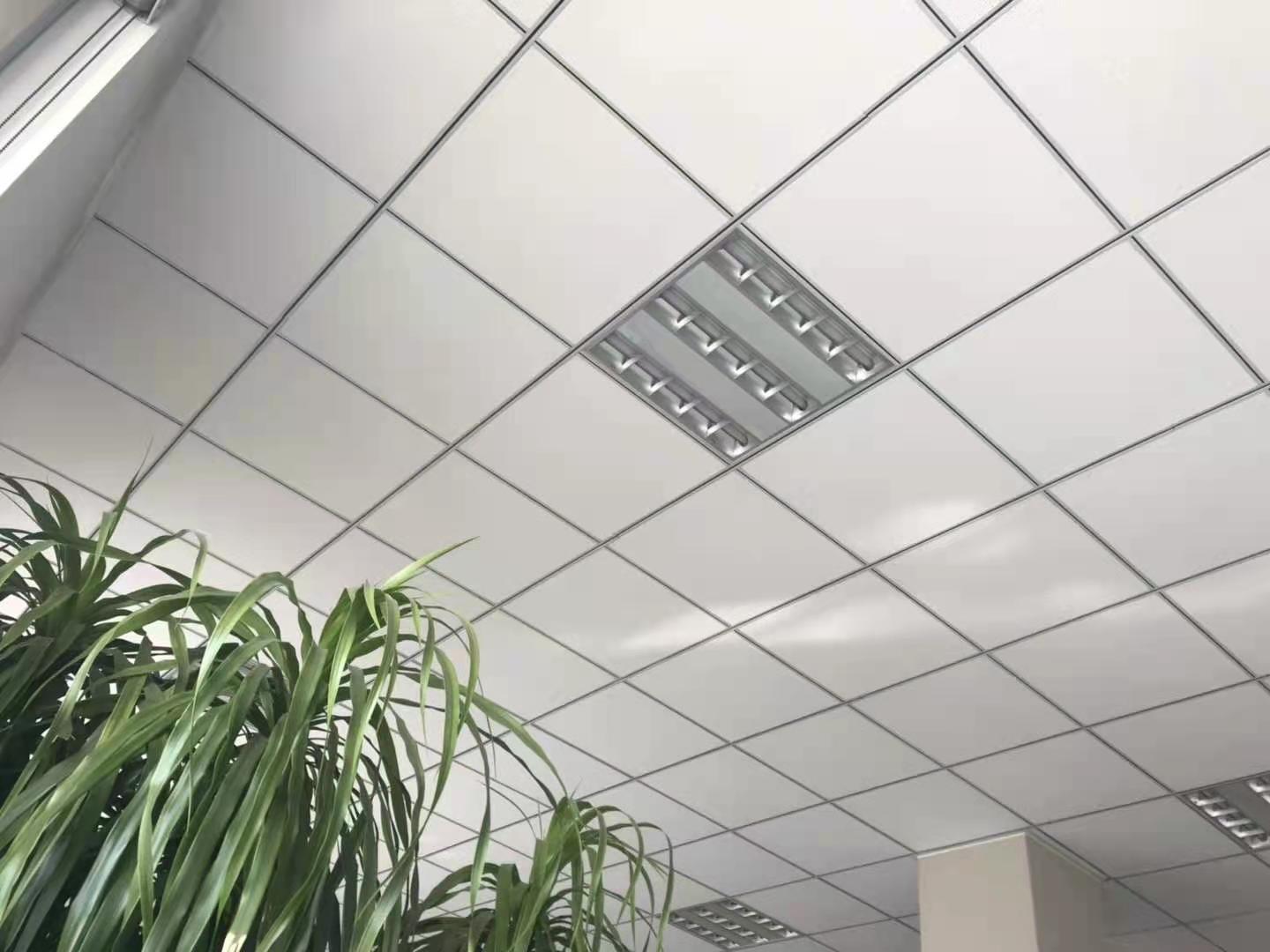 3. Delamination of Calcium Silicate Boards
Conventional CS boards exhibit coefficient of hygroscopic expansion (CHE) mismatches. The core (CHE: 0.012%/RH%) expands faster than the surface (CHE: 0.006%/RH%), generating shear stresses >2.5MPa. This manifests as "craze mapping"—web-like cracks along joint lines that harbor mold
**4. Mold Colonization Dynamics >75% RH, Aspergillus and Stachybotrys spores germinate within 48 hours. Cellulose-containing materials become nutrient sources, with colony densities reaching *10⁶ CFU/cm²* in 3 weeks. This compromises IAQ (indoor air quality) and violates WHO health guidelines.
5. Thermal Bridging Condensation
Uninsulated suspension systems create cold spots where ambient moisture condenses. A single contains 2.3×10¹² water molecules—enough to initiate all failure modes simultaneously.
The Gold Standard: Material Specifications That Withstand Tropical Science
1. Hydrophobic Mineral Fiber Requirements
| Parameter | Minimum Standard | Test Method | Failure Risk at Non-Compliance | |-----------------------|------------------------|-------------------|--------------------------------| | Moisture absorption | ≤2.5% (24h immersion C1104 | Sagging >8mm/year | | Wet MOR retention | ≥85% of dry strength | ASTM C393 | Panel collapse under load | | Hydrostatic resistance| ≥500mm water column | DIN EN 20811 | Capillary saturation |
2. Grid System Corrosion Resistance
Mandatory Certifications:
- ISO 12944 C5-M certification (marine atmosphere)
- ASTM,500 hours
- Electrochemical impedance spectroscopy (EIS) >10⁶ Ω·cm²
| Property | Tropical Grade | Standard Grade | Test Method | |------------------------|---------------------|-------------------|-------------------| | Linear expansion (90%RH)| ≤0.008% | 0.015% | ASTM E228 | | Wet MOR | ≥8 MPa | | JIS A5410 | | Mold resistance | Class 0 (ASTM G21) | Class 3 | ISO 846 |
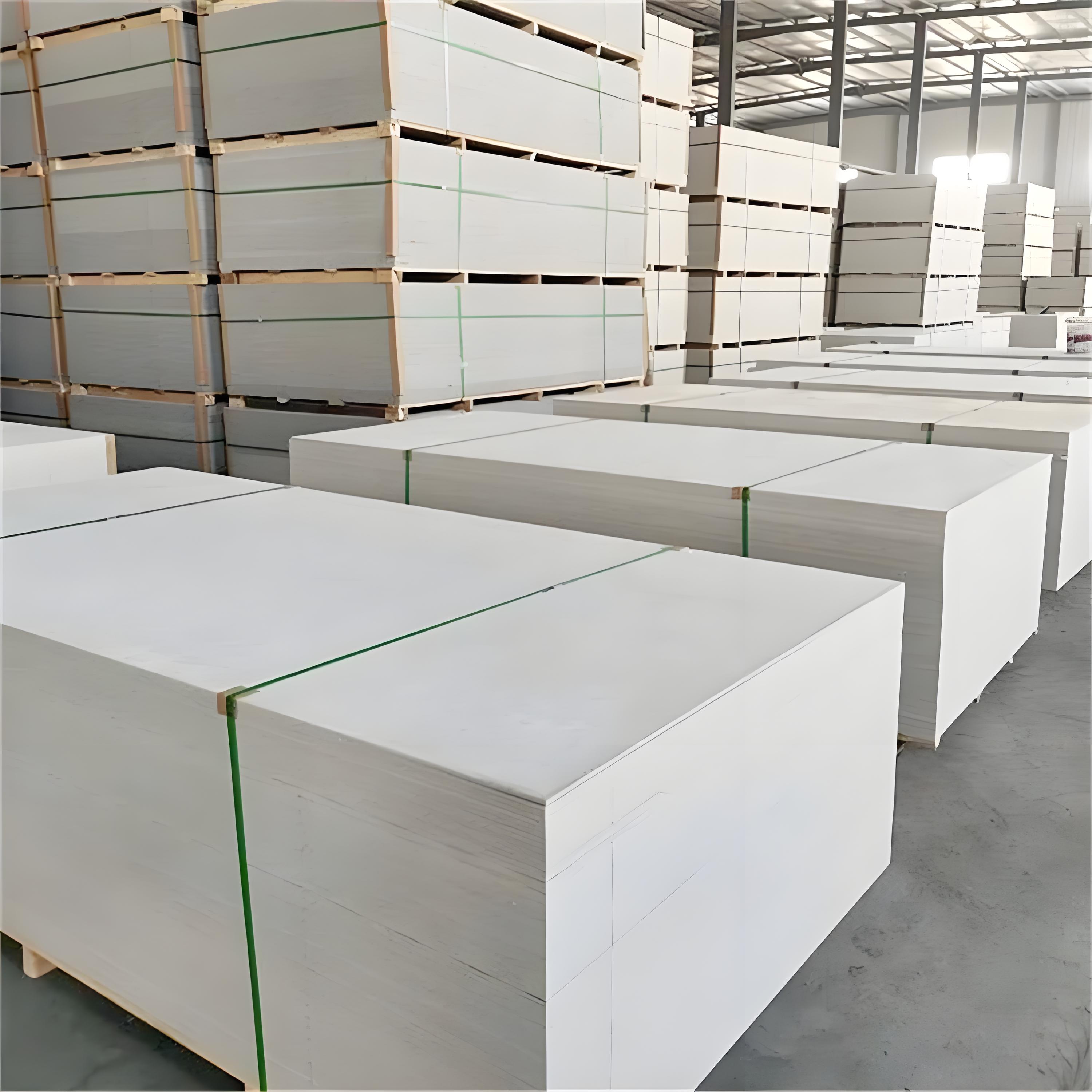 Pano's Climate-Engineered Solutions: Beyond Surface Treatment
PanoDRY™ Mineral Fiber System
- Core Technology: Plasma-enhanced hydrophobic treatment (contact angle: 142°)
- Moisture Management: Gradient-density fiber matrix with macro-meso-micro pores
- Validation Data:
- Moisture absorption: 1.2% @ 96h/95%RH (exceeds ASTM C1104) @ 40°C/90%RH (vs. industry avg. 4.2mm)
PanoSEAL™ Calcium Silicate Boards
- Polymer Hybridization: Silane-modified pozzolanic matrix with-direction reinforcement
- Humidity Buffering: 34% moisture storage capacity (EN ISO 12571)
- Case Study: Bali Hospital ICU Renovation
- Problem: Daily sterilization caused 90% RH spikes → panel delamination
- Solution: 15mm PanoSEAL™ with HumiLock™ edge sealing
- Result: Zero cracks after 18 months | IAQ mold counts <200 CFU/m³
PanoGRID™ C6M Suspension System
- Triple-Protection Coating:
- Zinc-aluminum-magnesium alloy (ZAM) base layer
- Epoxy-polyester hybrid intermediate
- Fluoropolymer topcoat
- Thermal Break Innovation: Glass-reinforced polyamide isolλ=0.23 W/mK)
- Performance Metrics:
- Salt spray resistance: 3,000 hours (ISO 9227)
- Critical relative humidity (CRH): 92% (vs. 68% for galvanized steel)
Project Validation: Engineering Triumphs in
Case 1: Langkawi Marine Research Center (Malaysia)
- Conditions: Salt spray 2.8mg/m²/day | RH 95% avg.
- Challenge: Grid corrosion caused ceiling collapse in prior facility
- Pano Solution:
- PanoDRY™ panels with AgION™ antimicrobial
- PanoGRID™ with sacrificial anode monitoring
- Results:
- 0% corrosion after 42 months000/year
Case 2: Doha Metro Station (Qatar)
- Challenge: Condensation drips on platforms (ΔT=15°C)
- Solution:
- PanoSEAL™ boards with phase-change material (PCM) core
- PanoGRID™ with thermal breaks every 600mm
- Outcome:
- Condensation eliminated (surface temp within 1°C of ambient)
- LEED Innovation Credit achieved The Lifecycle Economics of Humidity-Optim Cost Factor | Standard System | Pano System | Delta | |----------------------|---------------------|--------------------|--------------| | Initial cost | $18.50/m² | $23.90/m² | +29% | | Year 3 replacement | $.80/m² | $0 | -100% | | Mold remediation | $4.20/m²/year | $0.15/m²/year | -96% | | 10-year TCO | $67.30/m² | $25.10/m² | -63% | Data based on 14 Southeast Asian projects (2020-2023)
Implementing Humidity-Resistant Ceilings: A 5-Step Protocol
-
Environmental Profiling
Conduct 72-hour RH/temperature logging (per ASHRAE 55)
-
Material Specification
Require:
- Moisture absorption reports (ASTM C1104)
- EIS corrosion data
- ASTM G21 mold testing
- Detailing Critical Junctions
- Use compression gaskets at perimeter joints
- Install vapor diffusion ports every 20m²
- Installation Quality Control
- Verify grid alignment within ±1.5mm/3m
- Conduct dew point calculations before panel mounting
- Performance Monitoring
Implement wireless RH sensors

 3. Delamination of Calcium Silicate Boards
 Pano's Climate-Engineered Solutions: Beyond Surface Treatment


